Getting passengers online



01
Who is the user and what is their problem?
02
What is the business problem?
03
What does the technology enable?
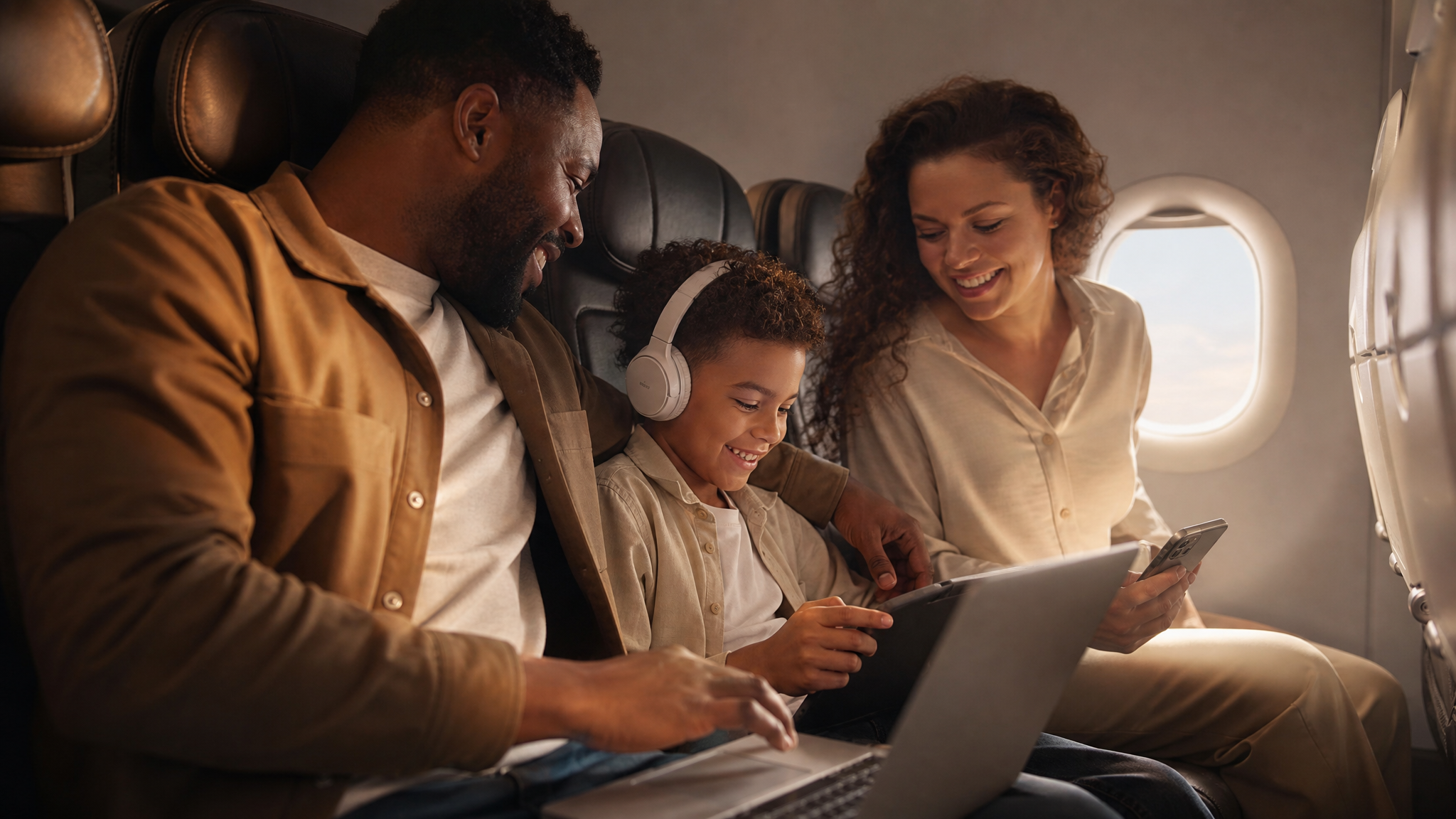
The Wi-Fi portal servers anyone who flies - from frequent business traveller to an anxious first-time passenger. No matter who, the goal is to get online in the air without thinking about how.
When shifting to offering free Wi-Fi, the airlines must find way to offset the investment in he antenna installation and the cost of the bandwidth usage.
Not much! The portal opens in a stripped-down browser with inconsistent support for JavaScript, cookies, and storage.
Main challenges
Discoverability
1
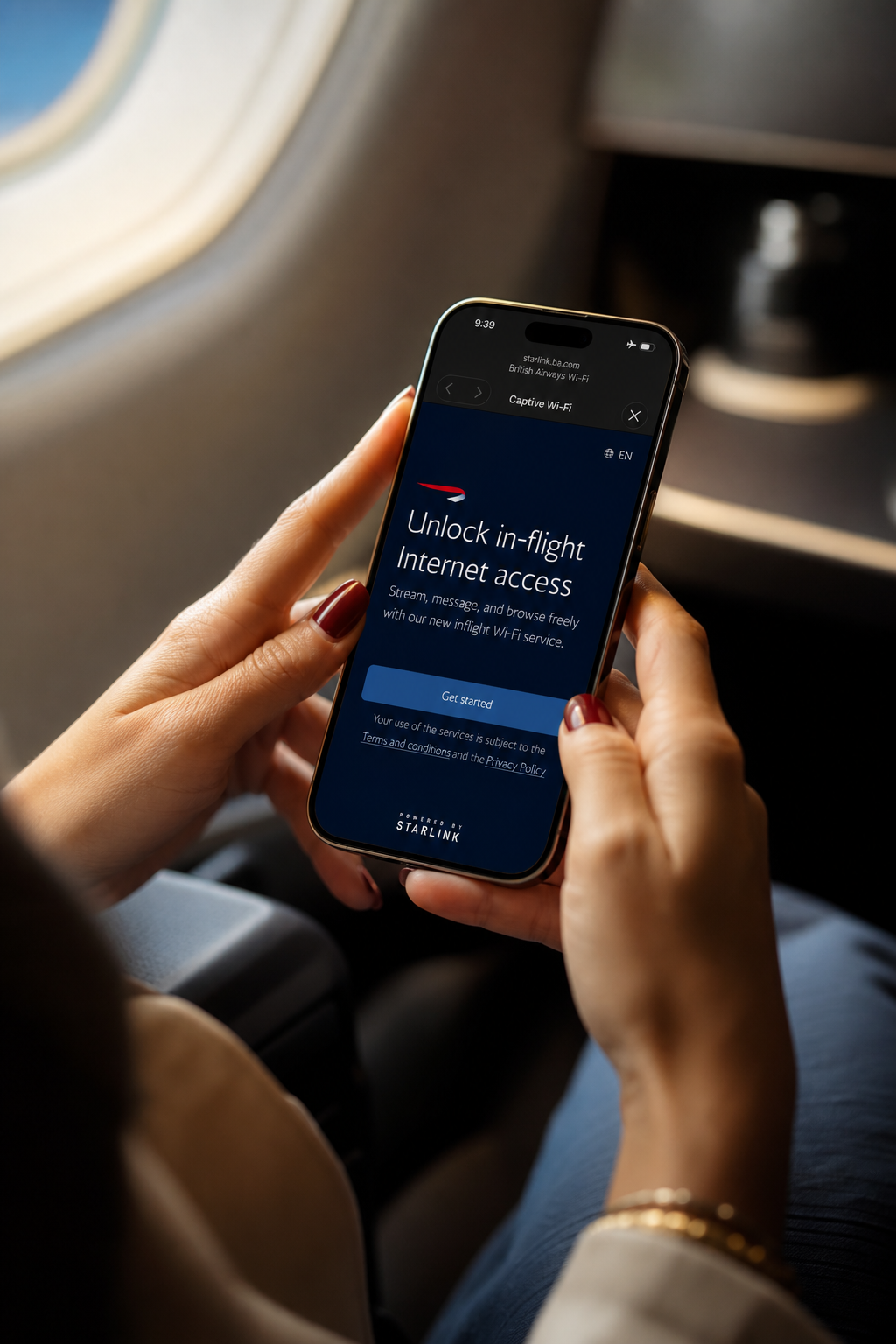
Half the problem is getting passengers to the portal in the first place. They need to know that onboard wifi exists, and that reaching it means connecting to a specific SSID, another acronym most have never heard. Solving that means designing well beyond the portal itself. Cabin crew were briefed to make a clear announcement explaining how to connect, and seat stickers were designed to give every passenger an in-place reference for finding the network and opening the portal.
Technical constraints
2
The portal lives inside a captive mini-browser opened by the device's operating system, not a normal browser. It is technically stripped: limited JavaScript support, no cookies, no way to persist a login token between sessions etc. Once the user closes that window, there is no easy path back in. Designing around what the captive browser can support was one of the central challenges of the project.
Offsetting the cost
3
Installing Starlink antennas across a fleet and then covering ongoing bandwidth for every passenger for free is expensive, and the cost has to come from somewhere. The airlines offset it in two ways. The first is loyalty: passengers are encouraged, and in some tiers required, to sign in with their loyalty programme, which opens up future monetisation through targeted offers and direct outreach to known members. The second is advertising: a short ad runs before the connection is established, paid for by sponsors and timed to a moment the passenger was going to wait through anyway.
Multi-brand set-up
4
Each of the three airlines on the platform — British Airways, Iberia, Aer Lingus — has a distinct visual identity, and none of them share a common skeleton. The challenge was to build a design system that respected all three brands as fully as if each had its own bespoke product, while still running as one codebase with three themes. Color, typography and imagery change while the flow underneath stays the same. The result is one product to maintain and three experiences feeling like a bespoke build.
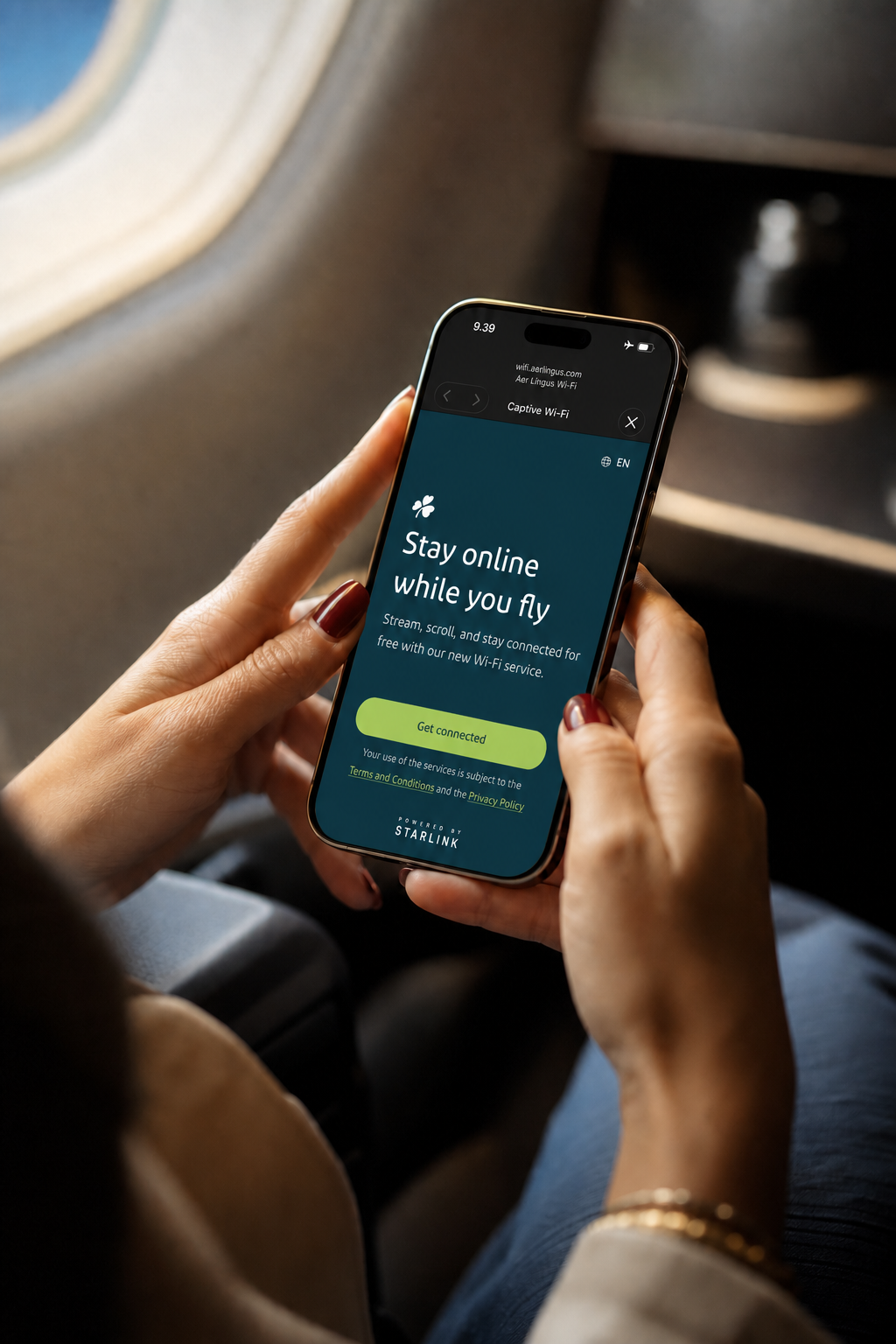
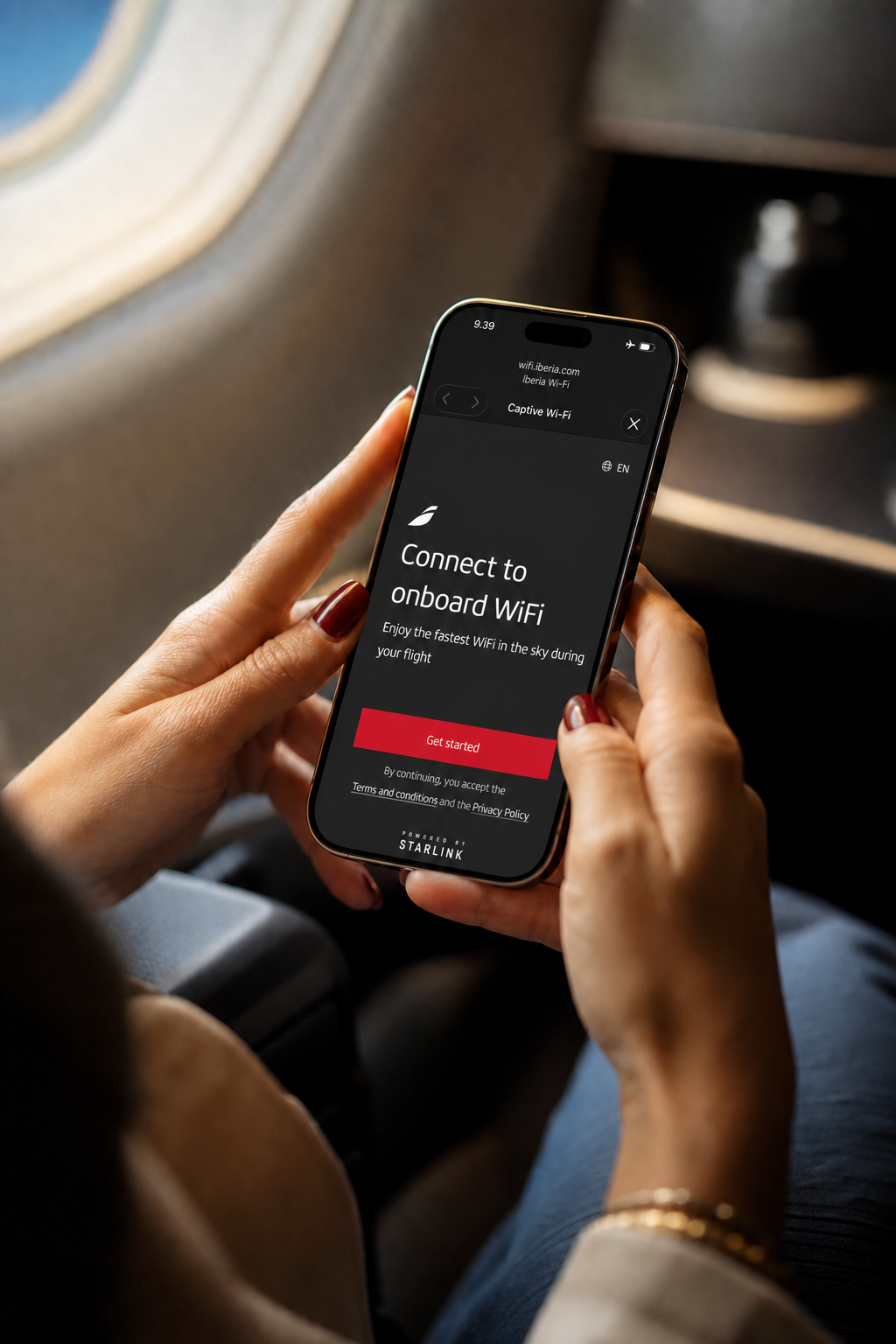

Turning hard problems into simple experiences
We're not here to follow trends—we're here to build something timeless. With a blend of creativity, strategy, and heart, we help ideas come to life.